The BBS That Wouldn't Sink: A Midnight Watch Aboard the Internet's Last Pirate Tavern
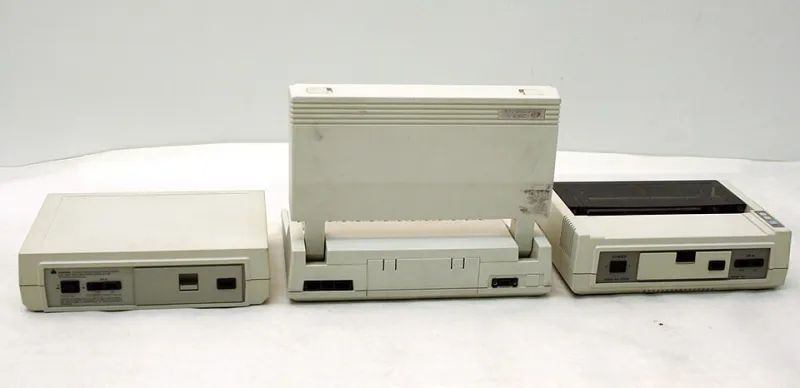
Photo: Hewlett-Packard (progettista/ costruttore), CC BY-SA 4.0, via Wikimedia Commons
At 11:47 p.m. Eastern on a Tuesday in 2026, I did something no sane adult should do: I typed a telnet command into a terminal window, waited for a fake modem handshake to finish chirping, and prepared to be judged by pirates.
The board is called Black Flag Harbor, or at least that is the name its sysop asked me to use. It is a bulletin board system, a BBS, which means it is basically a website that refuses to behave like a website. No infinite scroll. No recommendation engine. No branded content. Just message bases, a chat room, a file area, and a door game about moving imaginary galleons around an ASCII map. The interface arrives at a deliberate, punishing 2400 baud. In 2026, that is not a limitation. It is a lifestyle choice.
I had heard rumors about Black Flag Harbor from a friend who collects dead media the way other people collect vinyl. He described it as "a pirate role-play server that forgot to end." That turned out to be generous. It has not forgotten. It has made forgetting illegal.
The Log-On Heard Round the Rec Room
My first screen was a blocky ANSI drawing of a harbor. A skull-and-crossbones floated above a prompt that read: STATE YER BUSINESS, THEN YER NAME. I typed both. A few seconds later, the sysop, who goes by Captain Mordecai, approved my guest account manually. He is 61, lives outside Columbus, Ohio, and has been running the board since 1997. He answered my questions in the chat channel with the weary patience of a man who has explained the rules many times and will happily explain them again, slowly, until you get it.
"People think it's nostalgia," he wrote. "It's not. Nostalgia is when you watch a VHS tape and feel warm. This is a functioning town. A small one. With a weird number of parrots."
Black Flag Harbor has 43 active users. That is not a typo. Forty-three. They range in age from 29 to 78. A retired schoolteacher in Arizona runs the message board's history section. A college student in Chicago handles the door game's weekly fleet orders. A guy in Florida, who insists on being called Barnacle Bill, maintains the file library, which is mostly public-domain sea shanties, old text adventures, and one suspiciously large folder labeled "definitely not cursed."
A Night on the Board, Minus the Sea Shanties
The evening has a rhythm. At 8 p.m., the Tavern chat opens. Conversation is loose but monitored. At 9, Captain Mordecai posts the nightly weather report, which is fictional but consistent: winds from the southeast, moderate chop, chance of kraken after midnight. At 9:30, the Treasure Fleet game processes moves. Users command ships with names like The Deductible, HMS Unpaid Intern, and Lazy Susan. The goal is to accumulate doubloons by trading imaginary cargo between imaginary ports. The graphics are letters. The drama is real.
At 10:12, a user named SaltWench began arguing that the port of Tortuga should be closed for repairs. Another user, Pegleg Pete, accused her of "trying to corner the rum market again." Within minutes, three other users had weighed in. Captain Mordecai typed a single line: "Take it to the grievance board or take it to bed." The chat went quiet. SaltWench apologized. Pegleg Pete apologized. The fleet sailed on.
This is the part that surprised me. The pirate code is not decorative. It is load-bearing. Rule one: no real-world politics in the main hall. Rule two: no sharing personal information without consent. Rule three: no mutinies before midnight, because the sysop is old and needs his sleep. Rule four: if you start a feud, you finish it in the designated Feud Zone, which is a separate message base with an ASCII tumbleweed in the header.
The Code Is More What You'd Call Guidelines, Except It Isn't
I asked Captain Mordecai what happens when someone breaks the code. He said the board has a three-strike system. First strike: a public warning in the Tavern. Second strike: a week of being told the sea is angry with you, which apparently means your posts get flagged with a frowning skull. Third strike: a temporary ban. Permanent bans are rare. He has issued four in 29 years. One was for spamming. One was for threatening another user. One was for repeatedly logging in as a user's ex-wife. The fourth, he said, was "for being a jerk about the door game."
"A pirate crew is only as good as its worst behaved member," he wrote. "And I'm the captain. So I get to be the jerk about the door game sometimes."
Why It Outlived the Feed
Black Flag Harbor should not still exist. It has no mobile app. It has no notifications. It has no way to go viral. Its busiest night in 2025 drew 17 users. Its quietest night drew two. But it has something the modern social web keeps trying to manufacture and failing: a sense of place.
The board is slow on purpose. You cannot doomscroll through 43 people. You cannot get into a fight with a stranger in another time zone unless you both agree to meet in the Feud Zone and wait for the next message cycle. The cost of being rude is social, not algorithmic. People remember.
"The feed wants you to react," said a user named Mister Midshipman, a 34-year-old librarian in Oregon. "The BBS wants you to read. There's a difference. I log on here because nobody is trying to sell me a mattress."
Keeping the Lights and the Modems On
Captain Mordecai runs Black Flag Harbor on a Raspberry Pi in a fireproof box, connected to a backup battery and a router that he pats affectionately when it misbehaves. The telnet bridge is modern, but the board software is older than some of its users. He backs it up weekly to a hard drive and once a month to a USB stick he keeps in a coffee can labeled "emergency grog." The total monthly cost is about $38, mostly electricity and a domain renewal. Donations come in through a PayPal link disguised as a treasure chest. He says he has never taken a salary and never will.
"The day this becomes a business is the day it becomes a job," he said. "And I already have a job. I'm a retired insurance adjuster."
Should You Visit?
If you go, go quietly. Lurk first. Read the code. Do not enter the Tavern and announce that you have a great idea for a podcast. Do not call the ASCII ships "cute." Do not ask why the board is not on Discord. Captain Mordecai has heard that one before. His answer is always the same: "Because Discord is not a harbor. It's a food court."
At 12:04 a.m., my guest session ended with a message: "FAIR WINDS AND FOLLOWING SEAS. COME BACK WHEN YER LESS OF A LANDLUBBER." I closed the terminal. My phone immediately buzzed with a push notification from a real social network. I ignored it. For one night, the slowest, smallest, most stubborn corner of the internet had won.