The Jolly Roger Rides a Pontoon: Field Notes From America’s Freshwater Pirate Fleet
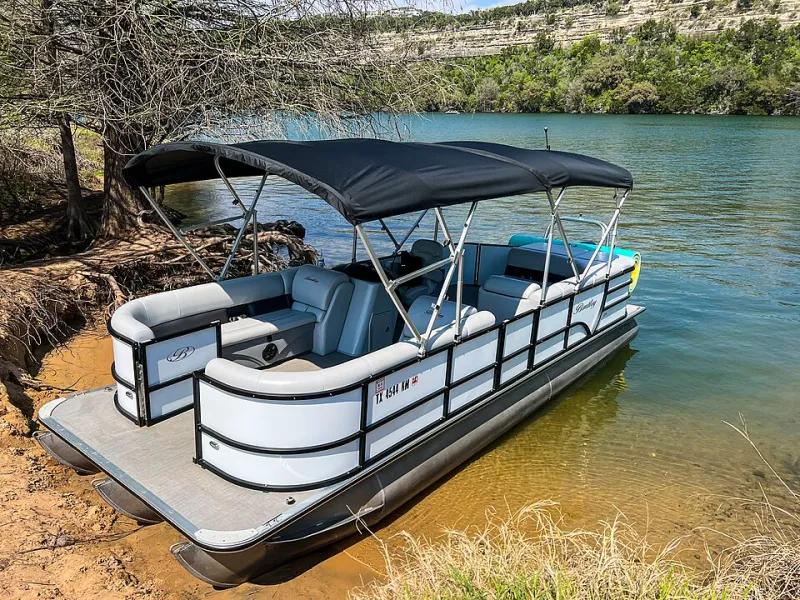
Photo: Wake Riderz Boat Rental Lake Austin, CC BY-SA 4.0, via Wikimedia Commons
There is a moment, somewhere on a lake in Minnesota or Wisconsin or Missouri, when a 24-foot pontoon boat glides past at four miles per hour, a black Jolly Roger snapping from the stern, and a man in cargo shorts raises a koozie like a scepter. He is not a pirate in any legal or historical sense. He is Dave. But on this water, for this afternoon, he is Captain Dave, and his vessel is the S.S. Weekend Custody. This is freshwater piracy: the most wholesome mutiny in America.
The Uniform Is Cargo Shorts and a Lanyard
Caribbean pirates had cutlasses, scurvy, and a terrifying reputation. Lake pirates have sunscreen, a Bluetooth speaker, and a laminated pontoon rental agreement. The uniform is strict but achievable: cargo shorts, a fishing shirt with at least two pockets, sandals worn with socks if the water is below 70 degrees, and a lanyard holding either a boat key or reading glasses. The hat is either a faded baseball cap or a tricorn purchased at a souvenir shop near the dam. Both are acceptable. Neither is waterproof.
What separates a lake pirate from a regular pontoon enthusiast is commitment to the bit. The flag goes up before the first cooler is opened. The boat gets a name. The captain gets a title. The first mate is usually whoever remembered the napkins. There may be a plastic parrot zip-tied to the Bimini frame, and there is always a story about how the parrot was almost lost in a squall, which means a brief rain shower near the boat ramp in 2019.
A Field Ranking of Lake Jolly Rogers
Not all freshwater pirate flags are created equal. After extensive observation from a folding chair on a public dock, I can confirm there are at least five distinct varieties.
-
The Classic Skull and Crossbones. Reliable, recognizable, and available at every marina gift shop between here and the interstate. Often sun-faded to a polite charcoal gray. This is the Honda Civic of pirate flags.
-
The Skull With a Beer Can. Technically not historical. Technically very popular. Usually flown by a boat whose captain has strong opinions about which local brewery makes the best summer ale and will share them at length.
-
The Crossed Fishing Rods. A regional variant. Signals that the owner considers himself a pirate of the walleye, the muskie, or at least the snack-sized bluegill. The flag is usually accompanied by a livewell pump that sounds like a small appliance in distress.
-
The Pirate Parrot With Sunglasses. Beloved by families with children and by adults who have decided that irony is a valid parenting strategy. This flag is never intimidating, which is the point.
-
The Custom Flag With the Boat’s Name and a Grayscale Photo of the Family Dog. This is not technically a Jolly Roger, but it is flying where a Jolly Roger should be, and the dog is wearing an eyepatch. We allow it.
The Cooler Is the Treasure Chest, and the Treasure Is String Cheese
Every lake pirate needs a treasure chest. On the high seas, that meant gold doubloons. On Lake Minnetonka, it means a 48-quart cooler with a sticker that says “Salt Life” even though the nearest ocean is a solid day’s drive. Inside: string cheese, turkey wraps, a bag of cherries, one suspiciously warm La Croix, and a backup bag of ice that will be forgotten until Sunday night.
The cooler is treated with the reverence of a ship’s hold. It is packed in a specific order. It is guarded from sunlight. It is never, under any circumstances, allowed to run empty. When someone says, “We’re low on ice,” the captain responds with the gravity of a man who has spotted sails on the horizon. A run to the marina store is organized. The mate is dispatched. The mission is called Operation Extra Bag.
Why It Works: The Most Wholesome Mutiny in America
Freshwater piracy is not about plunder. No one is boarding a rival pontoon and demanding its pretzels. The closest thing to a raid is drifting within shouting distance of a friend’s boat to ask if they have any sunscreen. The Jolly Roger is not a threat; it is a mood. It says: we are here to float, we are here to snack, and we are not taking any of this too seriously.
That may be why the subculture keeps spreading. A pontoon boat is slow, stable, and profoundly unglamorous. It is a floating patio. Flying a pirate flag on one is a gentle joke about adventure: the adventure is an hour and a half of drifting past a bald eagle nest while someone tries to get the Bluetooth speaker to connect. The stakes are low. The vibes are high. The captain is named Dave, and he has a lanyard.
How to Spot a Lake Pirate Without Getting Boarded
Look for the flag first. Then listen for the music, which will be either classic rock, Jimmy Buffett, or a playlist called “Boat Songs” that contains exactly one song by Jimmy Buffett and 40 songs that are not. Look for the cooler arrangement: if the cooler has its own seat and the children are sitting on towels, that is a pirate vessel. Look for the captain’s hat. If it is a tricorn, salute. If it is a baseball cap, also salute. The lake is a democracy.
And if you hear someone yell “arrr” across the water, do not panic. It is not a boarding party. It is Dave. He has spotted a loon. He would like you to look at the loon. That is the entire freshwater pirate code, and honestly, it is a pretty good one.