Admission Is Nine Dollars and the Eyepatch Is Extra: A Vibes-Only Ranking of America’s Boardwalk Pirate Museums
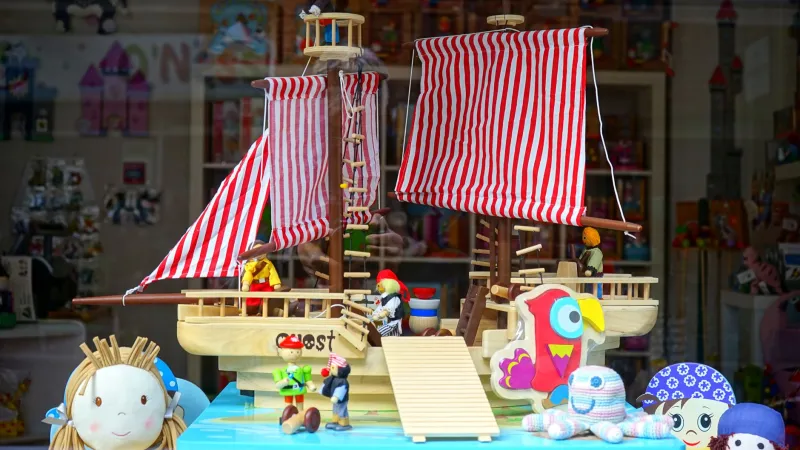
There is a specific smell to a boardwalk pirate museum: saltwater taffy, carpet shampoo, and the ghost of a fog machine that gave up sometime around 2009. You pay $9.50 at a little window, push through a door painted to look like a ship’s hull, and enter a dim room where a wax mannequin in a tricorn hat has been silently judging tourists since the Carter administration.
Here is the thing nobody puts on the brochure: the pirate museum is rarely a museum. It is a gift shop with a diorama problem. And yet, as of 2026, we keep lining up. So I spent a completely unscientific summer auditing the archetypes of the American boardwalk pirate attraction—not the specific names, because I fear the wrath of a man in a foam hat—and ranking them by vibes alone.
The Highly Official Criteria
My methodology was simple. I judged each attraction on five factors: the ratio of gift-shop square footage to actual exhibit square footage; the structural integrity of any animatronic; the number of props that were clearly purchased from a party-supply store; whether the staff member at the desk seemed like they would rather be fishing; and how many different fonts appeared on the same plastic eyepatch.
No museum was named. No museum was harmed. One museum’s fog machine did cough at me, and I choose to interpret that as a greeting.
No. 5: The Seafood-Shack Side Room
You come for fried clams. You stay because there is a door next to the restrooms marked “Museum.” Inside: three glass cases, a cannonball that may or may not be a painted paperweight, a laminated newspaper clipping, and a mannequin missing one arm. The gift shop is a shelf by the cash register with two eyepatches and a refrigerator magnet shaped like a parrot.
This is barely a museum, which should rank it last, but I cannot quit it. You can eat a hush puppy while looking at a cutlass. That is a genuinely elite American experience. It gets the No. 5 spot because it never pretended to be more than a side quest, and honestly, that is the most honest pirate behavior on this entire list.
No. 4: The Defunct Amusement-Park Annex
Every so often, a boardwalk attraction closes, gets absorbed into a larger property, and becomes a pirate museum the way a spare bedroom becomes a home office. The signage still says something like “Now Open!” in sun-bleached letters. The carpet has a nautical pattern that was discontinued before most visitors were born. There is one animatronic pirate behind a rope, and he moves at the speed of a man who has been told the meeting could have been an email.
This archetype scores high on nostalgia and low on actual information. The placards are impossible to read. The gift shop stocks the same sword you saw at the county fair, but with a sticker that says “Museum Quality.” The admission fee is somehow still $12. I respect the hustle. I do not respect the animatronic’s left eye, which is pointing at the ceiling, as if asking the heavens why he was cast in this role.
No. 3: The Earnest Historical Society
This is the museum where someone actually cares. It has research. It has footnotes. It has a volunteer named Gary who will tell you more about maritime insurance law than you ever wanted to know. There are real artifacts in glass cases—a compass, a bilge pump, a letter from a ship captain who definitely had scurvy and possibly a grudge.
The problem is not the history. The problem is the pace. You are standing in a room with one other visitor, reading a paragraph about the 1718 salvage dispute, while a distant fog machine hums like a refrigerator. The gift shop is small but tasteful, which is a disappointment if you came for a keychain shaped like a severed hand.
I rank it No. 3 because it is the only archetype that might accidentally teach you something. That is both its greatest strength and its greatest weakness. A pirate museum should leave you with questions, not a working knowledge of eighteenth-century customs duties.
No. 2: The Motel Lobby ‘Maritime Heritage Center’
This one is not on the boardwalk proper. It is attached to a motel that has a sign promising “Ocean Views” and a parking lot that smells like a distant dumpster. The museum occupies a former breakfast nook. There is a ship’s wheel bolted to the wall, a glass case of “authentic sea glass,” and a framed poster explaining that pirates were actually quite diverse, which is true and also something you could have learned from the internet for free.
The gift shop is a rack of postcards and a bowl of free condoms, which is more than some museums offer. I rank it No. 2 because it is the most predictable stop on any beach vacation: you check in, you see the word “museum,” you think, “Sure, why not,” and forty minutes later you are back in the lobby holding a keychain shaped like a shark’s tooth and wondering where your life went.
No. 1: The Full-Bore Boardwalk Buccaneer Experience
And here it is: the platonic ideal of the small-town pirate museum. The building is painted to look like a galleon. There is a life-size animatronic pirate at the entrance who says “Ahoy!” and then says nothing else for the rest of eternity. The exhibit is 90% gift shop and 10% “please do not touch the cannon.” The fog machine is doing its best. The mannequins have the unsettling smoothness of people who have never known sunscreen.
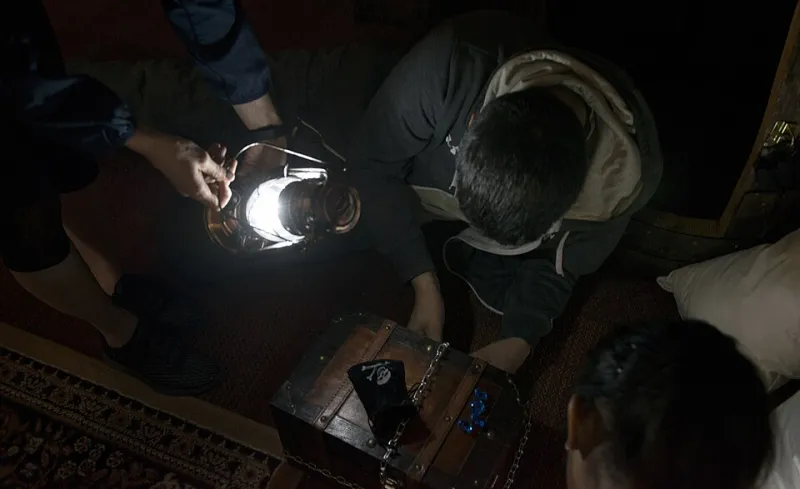
You pay $9.50 to walk through a dark hallway lined with dioramas of questionable historical accuracy. One scene depicts a pirate treasure chest overflowing with gold. Another depicts a pirate ship in a storm. A third depicts a skeleton at a desk, which is not a pirate activity I remember from the history books, but I respect the commitment to office drama.
The gift shop is the real attraction. It sells the same plastic eyepatch in twelve different fonts. It sells a “genuine treasure map” printed on paper that will dissolve in the first rain. It sells a foam sword that will be broken before you reach the car. And you will buy something. You will buy something because the museum was not really the point.
Why We Keep Paying Admission
We pay because the pirate museum is not a museum. It is a permission slip to be a little ridiculous for twenty minutes. It is a place where a family of four can stand in front of a wax mannequin in a tricorn hat and say, “Look, a pirate,” and everyone nods as if this is information. It is a gift shop with a story, and the story is that you came, you saw, you bought a keychain.
So here is to the boardwalk buccaneer attractions of America: the dim, the damp, the historically dubious, the suspiciously affordable. May your animatronics never fully malfunction, your fog machines never run dry, and your plastic eyepatches always come in at least twelve fonts.