The S.S. Splinter: Why Every Elementary School Has the Same Wooden Pirate Ship
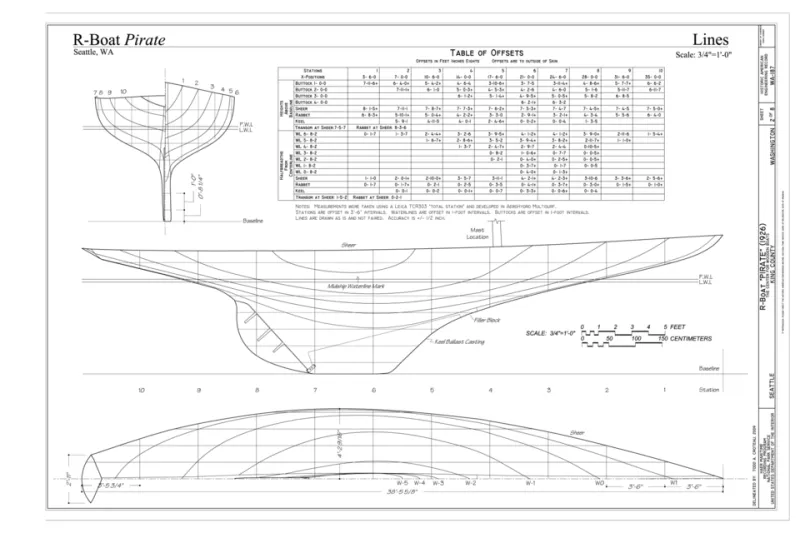
Photo: Croteau, Todd A., creator, Public domain, via Wikimedia Commons
You know the one. It’s behind the gym, past the kickball diamond, lurking at the edge of the blacktop like a ship that ran aground during recess and never got towed. It has a deck, a slide, a climbing wall, a steering wheel that turns nothing, and a crow’s nest that every kid claims is “the good spot” until someone gets stuck up there and the aide has to blow a whistle.
It is the wooden pirate ship playground, and if you attended an American elementary school anytime since the mid-1980s, you have probably climbed aboard one. Maybe yours was called the S.S. Something. Maybe it was just “the ship.” Either way, it was a rite of passage: a splintery, sun-bleached galleon in a sea of wood chips, and the closest most of us got to maritime adventure before we were old enough to drive to a lake.
A Brief History of the Post-and-Deck Galleon
The schoolyard pirate ship did not sail out of nowhere. It arrived on a wave of “adventure playground” enthusiasm that swept through American landscape architecture in the 1970s and ’80s. The idea was simple: kids wanted places to climb, hide, and pretend, not just swing and slide in a straight line. Timber was cheap, sturdy, and looked natural. And a ship—well, a ship was a fort with better branding.
“Post-and-deck structures were the workhorses of that era,” says Marla Hutchins, a landscape historian I reached by phone who studies postwar play equipment and, yes, has strong opinions about rope nets. “You could build a platform, add a roof, add a slide, and suddenly it was a castle, a spaceship, or a pirate ship. The pirate version won because pirates are the only culturally acceptable way to encourage children to walk a plank.”
Manufacturers like Landscape Structures, Miracle Recreation, and GameTime all offered modular wooden ship components. Schools and PTAs could order a hull, a deck, a crow’s nest, and a plastic steering wheel, then assemble the whole thing over a weekend with volunteers and a rented auger. The Consumer Product Safety Commission published playground guidelines. The American Society for Testing and Materials wrote standards. And somewhere in all that sensible safety language, a thousand wooden pirate ships were born.
The Design DNA: Rigging, Crow’s Nest, and One Questionable Ladder
A proper schoolyard galleon has a recognizable anatomy. There’s the main deck, usually elevated four to six feet, accessible by a ladder, a rock wall, or a gently sloping ramp that becomes a slide the moment it rains. There’s the crow’s nest—a small platform up high, often with a protective railing that is one enthusiastic kid away from becoming a suggestion. There’s the ship’s wheel, mounted at an angle that suggests the ship is either turning hard to port or falling over. And there’s the “rigging”: a rope net, a chain ladder, or a set of monkey bars that lets kids pretend they’re climbing the shrouds while actually just hanging upside down and yelling.
Wood was the original material, and it left an impression. Literally. The splinter was part of the experience. So was the smell of baked lumber on a hot September afternoon and the way the whole structure creaked when thirty second-graders all decided to be pirates at once.
Field Guide: Ranking the Fleet
After extensive field research—meaning I called three parents, scrolled through a lot of old Facebook photos, and remembered my own childhood—I present a highly unscientific ranking of the most elaborate specimens.
5. The Landlocked Dinghy. Two decks, one slide, a steering wheel, and a sign that says “PIRATE SHIP” in case you missed it. Respectable. Unambitious.
4. The PTA’s Revenge. A standard ship with a few plastic cannons bolted on and a hand-painted Jolly Roger that has faded to a sad gray smudge. The cannons don’t fire, but they do make a satisfying thunk when you hit them with a kickball.
3. The Crow’s Nest of Questionable Engineering. This one has a rope net that everyone’s parents warned them about and everyone’s kids climbed anyway. The net is either the best part of recess or a future lawsuit, depending on your perspective.
2. The S.S. Splinter. An actual name, usually painted on a wooden sign by a parent with more enthusiasm than brush control. It has three levels, a bridge, and a slide that is somehow always wet.
1. The Black Pearl of the Booster Club. A multi-tower wooden fortress with a ship bow, a bridge, a crow’s nest, a bell, and a “treasure chest” storage box that has held nothing but a lost lunchbox since 1998. This is the Platonic ideal. This is the ship that made you beg your parents to arrive at school twenty minutes early.
Why Pirates? The Nautical Fantasy of Childhood
Why did the pirate ship beat the castle, the rocket, and the train? Pirates are rule-breakers with a cool hat and a parrot. They have treasure. They say things like “arr” and “avast.” They are, crucially, not teachers. A pirate ship on a playground is a permission slip to be loud, to claim territory, and to yell “walk the plank” at a classmate who is definitely not going to walk the plank because the aide is watching.
“Kids don’t need a lot of narrative,” Hutchins told me. “Give them a deck and a wheel and they’ll invent the rest. Pirates just give them a vocabulary. It’s a ship, so you’re going somewhere. It’s a pirate ship, so the going somewhere is probably illegal.”
Parents, meanwhile, have a more practical relationship with the ship. It is the place where you wait during pickup, where you sit on a bench and pretend not to notice your child is now the captain and has declared martial law. It is also the place where you once got a splinter so deep the school nurse had to use tweezers and a lecture about safety.
The Splinter Problem and the Great Rubber Resurfacing
By the late 1990s and 2000s, many wooden ships were aging badly. Wood rot, splinters, and changing safety standards led schools to replace them with plastic-and-metal structures or rubberized surfacing. Some ships were torn out entirely. Others were retrofitted with plastic slides, shade sails, and a fresh coat of stain that made them look like a midlife crisis in nautical form.
But the ship didn’t disappear. It evolved. Today you can find “nautical-themed” play structures made of recycled plastic lumber, with pretend telescopes and periscopes. The fantasy remains the same: a deck, a ladder, a place to pretend you’re somewhere else. In 2026, the schoolyard galleon is less likely to give you a splinter and more likely to have a sunshade and a QR code on the sign. It is still, fundamentally, a wooden ship that goes nowhere and means everything.
So here’s to the S.S. Splinter, wherever she may be. May your crow’s nest stay standing, your steering wheel keep turning, and your splinters stay shallow. And if you see a kid in a paper pirate hat yelling at the top of the slide, just know: that’s not a playground. That’s a voyage.