Thirty Days of Weevil Biscuits: My Kitchen Became the Worst Ship in the Fleet
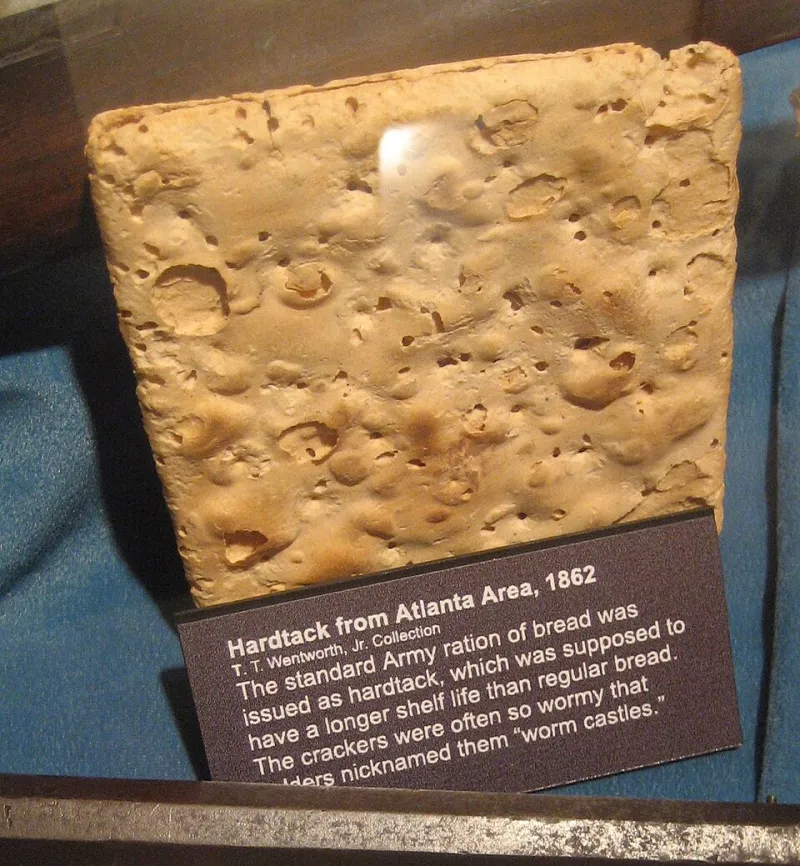
Photo: Infrogmation of New Orleans, CC BY-SA 3.0, via Wikimedia Commons
The Bonkers Idea That Started It All
Every food experiment begins the same way: someone says a thing out loud at a party and nobody stops them. In my case, it was me, third beer deep at a friend's backyard barbecue, declaring that sailors in the 1700s had it easy because "how hard can biscuits and salted meat be?"
My buddy Dave, a Civil War reenactor and therefore contractually obligated to ruin my evening, said: "You should try living on it for a month."
Reader, I did it. Thirty days. Nothing but ship's rations — food a Royal Navy crew could plausibly have stored in a damp hold for six months. And I'm here to report that our ancestors were not okay.
The Pantry of Despair
The rules were simple, in the way that swallowing an anchor is simple:
- Hardtack (flour, water, salt — baked into something geologically stable)
- Salted pork and salt beef (I brined my own; my kitchen smelled like a wharf)
- Dried peas and beans
- Oatmeal, raisins, and molasses
- Cheese and butter, heavily salted, the kind that survives because nothing wants to eat it
- Beer and rum rations, which I recreated in responsibly watered-down form because I have a job
- Lemons and limes, because I'd heard of scurvy and preferred not to meet it
No fresh produce. No refrigeration. No seasoning beyond what a merchant in Port Royal might stock. Total monthly grocery bill: about $85, which is the only part of this experience I'd recommend.
Week One: The Honeymoon Phase
Hardtack, fresh from the oven, is actually... fine? It's a cracker that resents you. Dip it in coffee (sailors did this constantly — the "lobscouse" stew tradition of soaking hardtack in everything started for a reason) and it's basically a sad biscotti.
The salt pork, sliced thin and fried, tasted like bacon's embittered uncle. My roommate wandered in, tried a piece, and said, "So this is why they were all in a hurry to find treasure."
Week Two: The Weevil Jokes Write Themselves
Here's a fun historical fact I confirmed: hardtack gets harder. Way harder. By day fourteen, mine could have replaced a roof tile. Sailors reportedly tapped biscuits on the table to shake the weevils out before eating — and when I tell you I stared at my batch and genuinely wondered, you'll understand how far the madness had spread.
Dinner parties during this stretch were grim. I served my friends a proper sailor's stew: salt beef, dried peas, hardtack crumbled in as thickener. My friend Rosa took one bite and said, "This tastes like a rainstorm over a parking lot." My father, visiting from Ohio, ate his whole bowl out of what I can only assume was fear.
The grog, though? Grog held up. Rum, water, a squeeze of lime, a spoon of molasses. It's not a good cocktail, but it's a story of a cocktail, and after a day of chewing pea porridge, I understood why an entire navy ran on it.
Week Three: The Salt Awakening
Around day nineteen, I hit a wall made entirely of sodium. My rings didn't fit. I dreamed of lettuce — actual, real dreams, with plotlines, about lettuce. Historical sailors got their vitamins from whatever citrus the purser hadn't sold off, and I now understand why scurvy was the second most feared thing on a ship.
The unsung hero of the whole experiment: oatmeal with molasses and raisins. It's genuinely good! It's the one meal I've kept in rotation post-experiment, mostly because it requires zero courage.
The Verdict, Landlubbers
Would I recommend a month of ship's rations? Absolutely not, and yet I'm weirdly glad I did it. You come out the other side with a real, chewy respect for the millions of sailors who crossed oceans eating food that predated the concept of "food."
Modern survivalist preppers, take note: your Mylar-packed freeze-dried stash is a spa menu by comparison. And the next time someone hands you a $14 artisan sea-salt cracker at a farmers market, remember — the original version was so tough it doubled as a dinner plate.
Fair winds, and may your bread always be softer than history's.